
Originally published in Jewish News: https://www.jewishnews.co.uk/opinion-israels-property-market-is-defying-the-war/
Wars are usually expected to paralyse economies. They disrupt labour markets, destroy infrastructure and inject enormous uncertainty into investment decisions. In the current conflict, the wider global economy is also feeling the shock through energy markets: oil prices briefly surged toward $120 a barrel amid fears that fighting with Iran could disrupt supply through the Strait of Hormuz long term, through which roughly a fifth of the world’s oil passes.
Energy shocks of that scale rarely stay confined to the region. Higher oil prices push up inflation, increase production costs and weaken economic growth across importing economies.
Yet one of the more surprising economic stories emerging from Israel’s confrontation with Iran is that the country’s property market, the sector most dependent on long-term confidence, has not collapsed.
According to estimates from Israel’s Finance Ministry, the current conflict with Iran could cost the country roughly NIS 9 billion (about $3 billion) every week. Few developed economies could absorb that level of shock without severe economic contraction.
The war that began after October 7 also created an immediate labour crisis in construction. Israel’s building sector had long relied heavily on Arab workers. When security restrictions halted their entry, the industry suddenly lost a substantial portion of its workforce, creating a significant labour shortage and slowing building activity.
Under normal circumstances, the combination of war, labour shortages and high interest rates would produce a dramatic property downturn.
That has not happened. National housing prices have remained broadly stable, with modest annual increases overall, even as transactions slowed in the early months of the conflict. At the same time, several major cities, including Jerusalem and parts of the central region, continued to see price growth during certain periods of the year.
Construction timelines have stretched and developers have faced significant operational challenges, but demand itself has proven remarkably durable.
The explanation is not purely economic. It is psychological.
Property markets reflect expectations about the future. Investors will tolerate uncertainty, even volatility, but they cannot tolerate the belief that the future itself is unstable. In most countries experiencing prolonged conflict, housing markets collapse because buyers simply stop believing that tomorrow will resemble today.
Israel’s market behaves differently. Part of the reason lies in the structure of the economy. Israel has evolved into a knowledge economy where high-tech contributes roughly 17–20% of GDP and accounts for more than half of the country’s exports.
That ecosystem has continued to generate capital inflows even during wartime, helping stabilise employment and incomes.
But the deeper explanation is cultural. Israelis have never operated under the assumption that stability is permanent. Economic and political uncertainty has been part of the country’s environment since its founding. As a result, many Israelis treat disruption as temporary rather than existential. Wars may interrupt activity, but they are rarely assumed to define the long-term trajectory of the country.
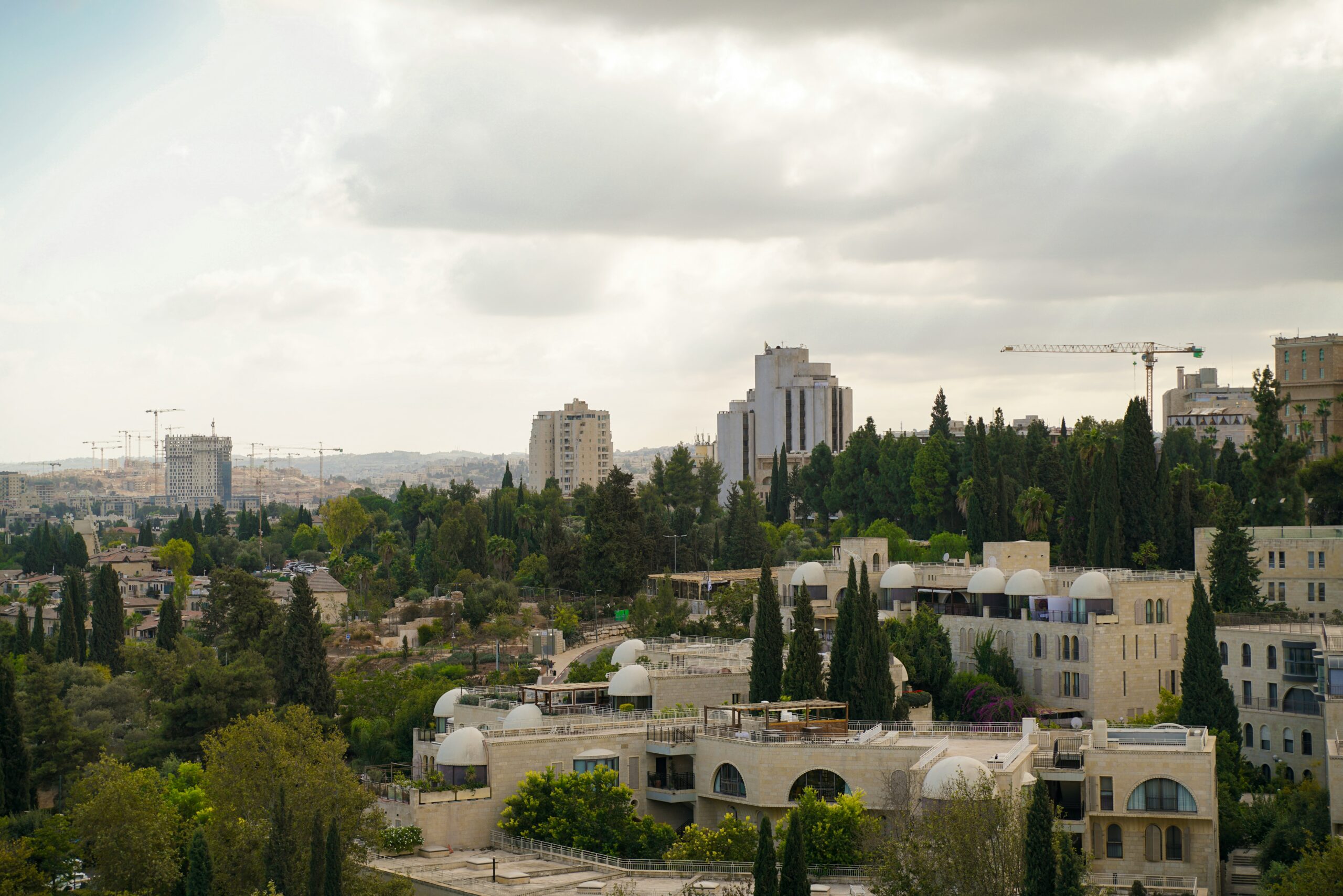
The built environment tells that story clearly. Missile strikes have caused real damage. Cities have experienced sirens, evacuations and interruptions to normal life. Yet construction cranes remain visible across Tel Aviv, Jerusalem and other major urban centres.
That is not simply stubbornness. It reflects the structural reality that Israel still faces a significant housing shortage within some demographics. Even during conflict, the country continues to need new housing units each year.
In conversations with international investors and diaspora clients over the past year, I have often been asked whether the war will fundamentally alter Israel’s property market. The assumption behind the question is understandable: surely a country under sustained security pressure cannot maintain normal real estate dynamics.
But that assumption misunderstands something essential about Israel.
Real estate is the most long-term of all economic activities. A developer planning a residential tower is making decisions that will shape the urban landscape for half a century. A family purchasing a home is making an even longer commitment. When those decisions continue during wartime, they signal a deeper level of confidence than any macroeconomic indicator.
That confidence has also been visible in financial markets. When the confrontation with Iran escalated, shares on the Tel Aviv Stock Exchange rose and the shekel strengthened. Some investors interpreted this reaction as reflecting a view that the escalation could potentially reduce certain long-term geopolitical risks for Israel.
Another factor influencing investor sentiment is Israel’s growing position as a defence and technology exporter. In recent years the country has reached record levels of defence exports, with a large share of transactions involving European countries.
Israel’s defence exports have increased significantly in recent years rising by roughly 56% over five year period placing the country among the world’s leading arms exporters and overtaking the United Kingdom in certain rankings of global defence sales. A notable example is the Arrow air defence system, which Israel agreed to sell to Germany in a landmark deal valued at approximately $6.5 billion.
Developments of this kind reinforce Israel’s reputation as a leading defence and technology power, and may contribute to the perception among investors that the country’s security pressures also drive demand for Israeli technology and systems.
In Israel, the cranes that remain on the skyline are signals of a collective assumption that the country’s future will continue to unfold, regardless of the turbulence surrounding it.
Markets react quickly to events, sometimes too quickly. Construction cranes are slower. Bothcan reflect the same underlying judgement: that Israel’s long-term trajectory remains intact.
That assumption, more than GDP figures or quarterly market data, may be one of the clearest indicators of Israel’s resilience.